If you are thinking about buying land in Le Papillon near Hattiesburg, it is easy to focus on acreage and price first. In reality, the smarter first step is figuring out what the land can legally and physically support. A parcel that looks simple online can come with zoning limits, access issues, flood review, septic questions, or utility surprises. This guide will help you sort through the practical first steps before you make an offer. Let’s dive in.
Start With Jurisdiction First
Before you assume anything about a lot, confirm where the parcel falls jurisdictionally. That matters because Lamar County rules apply in unincorporated areas, while land inside Hattiesburg or another municipality follows that city’s own permitting and utility process.
This one step can change your whole due diligence checklist. If you skip it, you may end up researching the wrong permit path, the wrong utility provider, or the wrong land-use rules.
Pull the Parcel Record Early
Once you know the parcel’s jurisdiction, your next move is to gather the basic record set. In Lamar County, that means comparing the county GIS map, the tax assessor record, and the chancery clerk land record index.
This helps you confirm that the legal description, parcel boundaries, and ownership trail all line up. It also gives you a better starting point before you spend money on surveys, site work, or plans.
Review the Key Documents
Ask for these documents as early as possible:
- Current deed
- Recorded plat, if one exists
- Any recorded easements
- Any recorded restrictions or covenants
- HOA rules, if the tract is in a subdivision
These papers can affect whether the lot is truly usable for your plans. A listing may describe land as ready to build, but the recorded documents are what matter.
Treat Online Records as a Starting Point
Lamar County notes that its online land-record index is a convenience copy and not the official record. That means online research is useful, but it should not be your final word when you are making a purchase decision.
If the tract is especially important to you, confirm the official record through the chancery clerk. That extra step can prevent expensive surprises later.
Confirm Access Before You Fall in Love
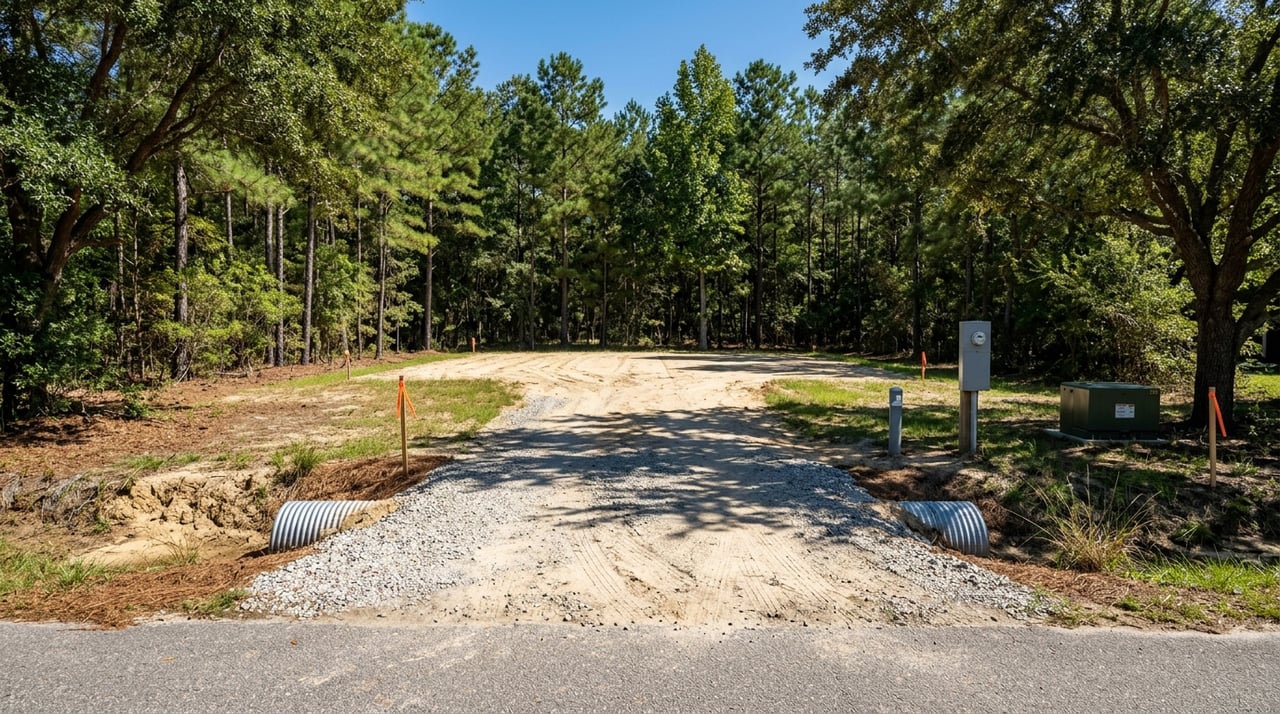
Access is one of the biggest issues in land deals. If a parcel does not have the kind of legal and physical access you need, the rest of the lot may not matter as much.
For subdivisions in unincorporated Lamar County, lots intended for sale must abut a dedicated public street or road. The county also allows common driveways for residential use, but if a third residence is added, that setup can become a private road that must be platted.
Questions to Ask About Access
Before you move forward, check:
- Does the parcel front a dedicated public road?
- Is access by easement?
- Is there a shared driveway arrangement?
- Will your intended use trigger additional platting requirements?
- Is the existing access actually usable in wet weather?
This is an area where paperwork and real-world conditions both matter. A parcel can look accessible on a map and still be much less practical once you walk it.
Check Zoning and Permit Triggers
Do not assume every piece of land in Le Papillon is a simple homesite. Lamar County adopted a zoning ordinance that covers portions of the unincorporated county, with district types that include agricultural, estate residential, several residential densities, manufactured-home districts, commercial, industrial, and special use.
In zoned areas, a Land Use Permit is required before construction, before placing a manufactured or modular home, or before relocating an existing structure. In unzoned areas, the county’s development permit and site-plan review process mainly applies to uses like commercial, retail, multifamily, industrial, institutional, campgrounds, and mobile-home parks.
Why This Matters to Buyers
Zoning does more than label a parcel. It can shape what type of structure you can place, whether extra approvals are needed, and how realistic your plans are from day one.
If you are buying with a custom home, manufactured home, or future investment use in mind, this step should happen before you settle on a price. It is much easier to walk away early than to buy first and problem-solve later.
Flood Review Is a Separate Step
Flood questions should be part of your first round of due diligence, not your last. Lamar County participates in FEMA’s National Flood Insurance Program and requires a Flood Plain Permit for any structure that will have utilities connected.
That means a parcel’s flood status can affect timeline, design, cost, and permit needs. Even if the land looks dry when you visit, the mapped flood review still matters.
E-911 Addressing Is Not Optional
In Lamar County, every structure must have an E-9-1-1 physical address for emergency response. The county also requires posted address numbers in three-inch reflective characters.
This may sound like a small detail, but it is one of the county’s basic requirements for residential utility setup. It belongs on your early checklist, not on your move-in checklist.
Verify Septic and Well Feasibility Early
For many land buyers, septic and water are where the real budget starts to take shape. Lamar County’s own residential utility checklist puts E-911 address, flood permit, and septic approval right at the top.
Septic approval runs through the Mississippi State Department of Health. According to MSDH, its soil-and-site evaluations produce a Permit/Recommendation, and that is required to obtain a water meter.
Why Soil Matters So Much
Soil and drainage conditions affect whether a lot can support a standard septic system or whether a more expensive alternative may be needed. This is why soil screening should happen early, before you start clearing land or sketching house plans.
USDA NRCS tools can help evaluate soil properties that affect septic absorption fields, foundations, and other site uses. It is a smart first filter before you commit more money.
If the Parcel Needs a Well
If the lot will rely on a private well, plan for more than just drilling cost. MSDH says it can test a single private well for bacteriological contamination, but not for minerals or chemicals.
So if you want a fuller picture of water quality, you will likely need additional testing beyond a basic bacteria screen. That is worth knowing before you assume the well side of the project is simple.
Do Not Assume Utilities Are the Same Everywhere
Utility service can vary from parcel to parcel, even within the same general area. Mississippi Public Service Commission records include Le Papillon Utility Company, LLC in Lamar County and Hattiesburg 39402, which is a good reminder that you should verify the actual provider and service type for the specific lot.
That means asking direct questions about water, power, and any connection requirements before you make improvement assumptions. Two nearby lots can have very different hookup paths and costs.
Budget for Dirt Work, Not Just Land Price
One of the most common land-buying mistakes is treating the purchase price like the main number. In reality, the raw land price may be only one line item in the total cost to make a parcel usable.
A practical first-pass budget should include the land itself, plus the work needed to make it functional. That gives you a more realistic picture of affordability.
Common Early Costs to Expect
Here are some of the cost ranges mentioned in the research:
- Boundary survey for up to half an acre: about $300 to $900
- Land clearing: about $1,200 to $8,000 per acre
- Gravel driveway: about $4 to $10 per square foot installed
- Conventional septic system: about $3,500 to $8,500
- Alternative septic system: about $4,000 to $15,000
- Engineered septic system: about $15,000 to $50,000
- Residential well: about $6,000 to $16,000 for a 200-foot well, with deeper or more difficult sites costing more
These numbers can move significantly based on site conditions. Tree density, slope, soil, legal complexity, and distance to utilities all matter.
Think in Total Project Cost
A broader land-development budget can be much higher than many buyers expect. The practical takeaway is simple: cheap land is not always inexpensive land.
If you budget for clearing, access, grading, septic, well, and utility connection work from the beginning, you will make better decisions. That approach can also help you compare two parcels more accurately, even if one has a lower sticker price.
A Simple First-Step Checklist
If you want a clean way to approach land in Le Papillon, use this sequence:
- Confirm whether the parcel is in unincorporated Lamar County or inside a municipality.
- Pull the parcel ID and compare GIS, tax, and land-record information.
- Review the deed, plat, easements, restrictions, and any HOA rules.
- Confirm legal and practical access.
- Check zoning status and permit triggers.
- Screen for flood review needs.
- Verify E-911 addressing requirements.
- Investigate septic feasibility through MSDH.
- Confirm water source, well needs, and utility provider.
- Build a budget that includes site work, not just the land price.
This order helps you avoid spending money in the wrong places. It also helps you spot deal-breakers before you get emotionally attached to a property.
Why Local Guidance Helps
Land is rarely a plug-and-play purchase. In Le Papillon and the greater Hattiesburg area, the best results usually come from slowing down, verifying the facts, and building your plan around the parcel’s real conditions.
If you are comparing land options, trying to understand Lamar County steps, or relocating to South Mississippi and need a grounded local perspective, working with someone who knows the area can make the process feel much clearer. When you are ready to talk through your options, connect with Beth Sumrall for practical guidance on land and real estate opportunities in the Hattiesburg area.
FAQs
What should you check first when buying land in Le Papillon?
- Start by confirming whether the parcel is in unincorporated Lamar County or inside a municipality, because that determines which rules, permits, and utility processes apply.
Does land in Lamar County always need zoning review?
- Portions of unincorporated Lamar County are covered by the county zoning ordinance, so you should verify the parcel’s zoning status before assuming a homesite or other use is allowed.
Do you need septic approval for land in Le Papillon?
- If the property will use an on-site wastewater system, septic approval through the Mississippi State Department of Health is an important early step, and the Permit/Recommendation is required to obtain a water meter.
Does every parcel in Le Papillon have the same utility provider?
- No. Utility service can vary by parcel, so you should confirm the actual provider and service type for the specific property before making cost assumptions.
Is flood review required when buying land in Lamar County?
- Flood review is a separate issue you should check early, and Lamar County requires a Flood Plain Permit for any structure that will have utilities connected.
Why is access so important for land in unincorporated Lamar County?
- Access affects whether the lot is practical to use and, in subdivision settings, whether it meets county requirements for frontage on a dedicated public street or road.