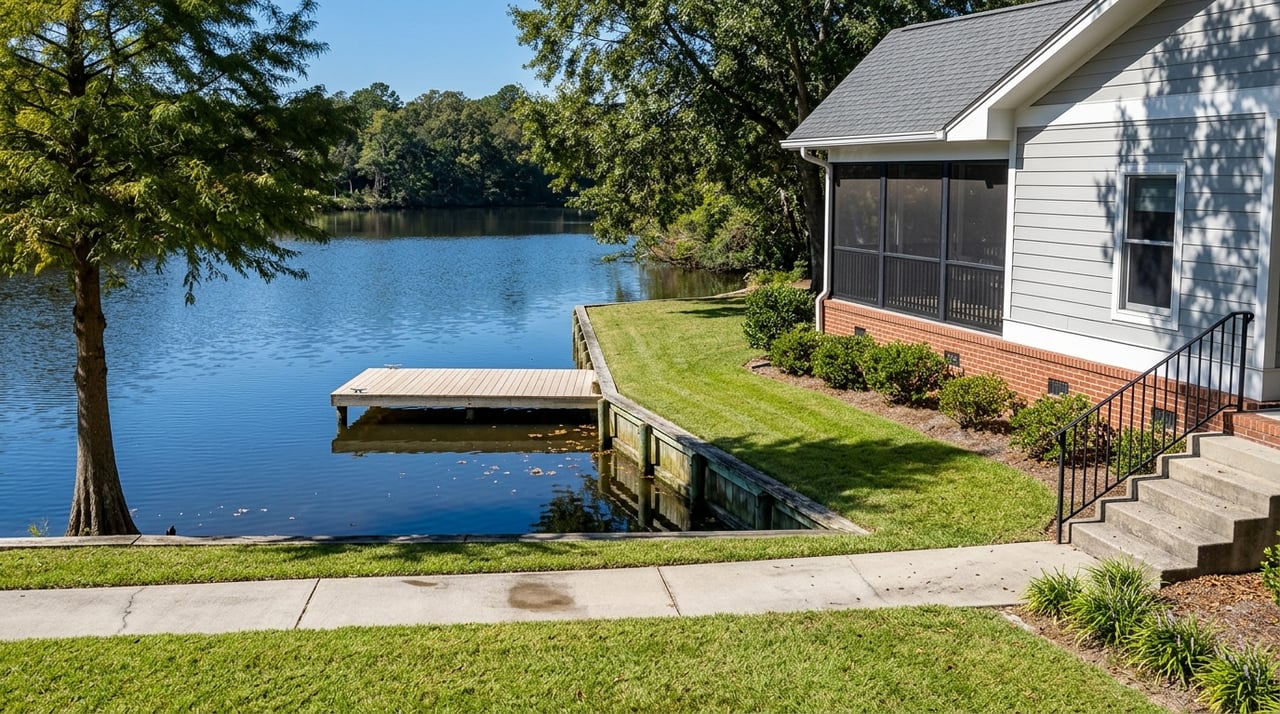
Dreaming about coffee on the dock, sunset views, and a quieter pace by the water? A backwater waterfront home can offer all of that, but it can also come with details that are easy to miss if you only focus on the view. If you are thinking about buying near water in Marshall County, you need to look beyond the house itself and understand flood risk, access rights, insurance, and ongoing property care. Let’s dive in.
Start With the Exact Flood Zone
One of the biggest mistakes waterfront buyers make is assuming every water-adjacent property carries the same flood risk. In Marshall County, flood hazards are part of local emergency planning, and floodplain rules can affect both development and insurance.
That means you should verify the specific parcel, not just rely on a neighborhood description or seller comments. If a home sits near low ground, a creek, river, oxbow, or reservoir, the flood zone should be checked carefully through Marshall County and Mississippi flood-map resources.
Why parcel-level checks matter
Flood zones can vary from one lot to the next. Mississippi emergency management materials broadly classify zones as low-risk X, moderate shaded-X, and higher-risk A, AE, V, and VE areas.
For you as a buyer, that difference can affect insurance costs, lender requirements, and your comfort level with the property. A home that looks similar to the one next door may still carry a very different level of flood exposure.
Understand Shoreline Access and Water Rights
A waterfront address does not automatically mean full private use of the shoreline or simple boat access. In Mississippi, the public has rights on public waterways for activities like transport, fishing, and water sports, but that does not give anyone the right to trespass on adjacent private land.
It also does not mean you or others can launch or land a craft from a private shore except at approved places. This is why it is so important to confirm what kind of waterbody the home touches and what rights are actually tied to the property.
Not all waterfront is the same
Some natural lakes and backwater areas can involve more complicated ownership questions than buyers expect. Depending on the location, a riparian owner may own the bed and banks without owning the water or the fish.
That sounds technical, but the practical takeaway is simple. Before you assume you can fish, dock a boat, or access the shoreline in a certain way, review the deed, recorded easements, and any documented access rights.
Boat access needs its own review
If boating is part of your plan, do not treat it as an automatic feature. The deed may describe the land, but it may not confirm the access setup you want.
You should verify whether there is a legal launch point, any recorded dock or ramp rights, and whether community rules affect how the shoreline can be used. Mississippi also requires most motorized vessels and sailboats used in the state’s territorial and navigable waters to be registered, and a new owner generally has 10 days from acquisition to register a boat.
Talk About Insurance Early
Waterfront buyers should start the insurance conversation well before closing week. The Mississippi Insurance Department says standard homeowners insurance does not cover flood damage, so flood coverage is usually purchased separately through the National Flood Insurance Program.
That single detail can have a major effect on your monthly housing cost. If the home is in a flood plain, your lender may also require flood insurance.
Compare more than one policy cost
When you budget for a backwater waterfront home, look at more than the base homeowners premium. The Mississippi Insurance Department also notes that homeowners policies may include separate wind and hail deductibles, and buyers should ask what perils are excluded or limited.
In other words, the true cost of ownership may be higher than the mortgage payment alone. Getting quotes early gives you time to compare options and make a more confident decision.
Waiting too long can create problems
Flood coverage is not usually something you can solve at the last minute. A new flood policy normally has a 30-day waiting period, with limited exceptions.
That is why a waterfront buyer should request insurance information early in the process. If you wait until the offer is nearly final, you may lose time and leverage.
Look Closely at Wells and Septic Systems
Some waterfront and more rural properties in Marshall County may rely on private wells or septic systems. If that is the case, these systems deserve careful attention during your due diligence period.
Mississippi State University Extension recommends that new wells be separated from septic components by required distances. Extension guidance also says existing wells should be tested at least annually, and septic systems should be inspected and pumped routinely.
Flooding can affect both systems
This matters even more on water-adjacent property. Flooded septic systems can back up into the home and contaminate drinking water.
That means you should not just ask whether the systems exist. You should also ask about condition, maintenance history, inspection status, and whether the property has experienced flooding that affected either system.
Expect More Ongoing Property Maintenance
A backwater home often brings extra maintenance beyond basic lawn care. Waterfront ownership can include managing runoff, erosion, and shoreline vegetation.
Mississippi State University Extension notes that riparian vegetation helps protect water quality. It also warns that sediment and polluted runoff can reduce water-holding capacity, degrade habitat, and increase flood risk to adjacent land.
The shoreline should not be an afterthought
If you are buying a home because of the water, you should understand what it takes to protect that setting. Clearing too much vegetation or ignoring drainage issues can create long-term problems for both the property and the surrounding water resource.
A good inspection and careful review of the site can help you spot signs of erosion, drainage concerns, and maintenance responsibilities before you close.
Review HOA Rules and Recorded Covenants
If the property is in a subdivision or lake community, the community documents matter just as much as the home itself. Recorded covenants and HOA rules can shape how you use the property and what you are required to pay.
This is especially important for waterfront homes that may involve shared ramps, common areas, or maintenance obligations. You want clarity before you commit, not surprises after closing.
What to confirm before moving forward
Mississippi title-examination guidance says buyers should review covenants to determine whether HOA membership is mandatory or voluntary and whether the association may levy assessments. That can affect both your monthly budget and how you use the property.
You should also review whether there are rules about shoreline improvements, shared amenities, access areas, or upkeep responsibilities. These details can have a real impact on whether the property fits your plans.
A Smart Waterfront Buyer Checklist
Before you move forward on a backwater waterfront home in 38685, focus on the details that shape both cost and use. A beautiful setting is important, but so is knowing exactly what you are buying.
Use this checklist as a starting point:
- Verify the exact flood zone for the parcel
- Confirm the type of waterbody the property borders
- Check whether shoreline access is public, private, or shared
- Review any recorded easements, access rights, dock rights, or ramp rights
- Request flood insurance and homeowners insurance quotes early
- Ask about wind and hail deductibles or coverage limits
- Review any private well testing and septic inspection history
- Look for signs of erosion, runoff, or drainage issues
- Read all HOA documents and recorded covenants carefully
- Confirm any shared maintenance duties or assessments
Why Local Guidance Matters
Buying waterfront property often means balancing lifestyle goals with practical research. You are not just buying square footage. You are also buying into a specific set of land, water, insurance, and maintenance realities.
That is where having direct guidance from an experienced broker can make the process clearer. When you know the right questions to ask early, you can avoid surprises and move forward with more confidence.
If you are thinking about buying a waterfront home in Marshall County or anywhere in Mississippi, Beth Sumrall can help you navigate the details and find a property that fits your goals.
FAQs
What should you check first before buying a backwater waterfront home in Marshall County?
- Start by verifying the exact flood zone for the parcel, since flood risk can vary from lot to lot even within the same area.
Does a waterfront lot in Mississippi automatically include boat access?
- No. You should confirm the type of waterbody, any recorded easements or access rights, and whether there is a legal or approved place to launch or land a boat.
Does homeowners insurance cover flood damage on a waterfront home?
- No. The Mississippi Insurance Department says standard homeowners insurance does not cover flood damage, so flood coverage is typically purchased separately.
When should you get a flood insurance quote for a waterfront home purchase?
- Early in the process, because a new flood policy normally has a 30-day waiting period with limited exceptions.
Why do well and septic systems matter on a waterfront property?
- Private wells and septic systems can be affected by flooding, poor maintenance, and site conditions, so you should review their condition, testing, and service history carefully.
What HOA questions should you ask before buying a waterfront home?
- Ask whether membership is mandatory or voluntary, whether assessments can be charged, and whether the rules affect shoreline use, shared areas, ramps, or maintenance responsibilities.